
If you’ve landed here, you’ve probably already spent time in the rabbit hole — clinic websites, Reddit threads, before-and-after photos. And somehow, after all of that, you’re still not sure which way to go. The information is everywhere and it’s almost entirely useless.
Every clinic in Dubai says they’re the best. Every Invisalign blog was written by someone who wants to sell you Invisalign. The cheerful claim that treatment is “virtually painless” is doing a lot of heavy lifting. (The first few days on a new aligner set are uncomfortable. Not unbearable — but let’s not pretend.)
What nobody writes is the honest version. What does it actually cost? What’s it like to live with? What are the things that trip people up? And which one — Invisalign or traditional braces — actually makes sense for a real adult in Dubai in 2026?
Now what about traditional braces?
Metal braces in Dubai run roughly AED 5,000 to AED 15,000. Ceramic braces — the tooth-coloured brackets that are less obvious from a distance — tend to cost between AED 7,000 and AED 18,000.
For a comparable case, the braces price is almost always lower than Invisalign. Sometimes the gap is a few thousand dirhams. Sometimes it’s significantly more. That’s not a detail to gloss over. For a lot of people, it’s the deciding factor, and there’s absolutely nothing wrong with that.
Something worth knowing: the braces price in Dubai has gotten more competitive over the past few years. More clinics, more specialists, real growth in dental tourism — it’s pushed prices down. If you got a quote in 2022 and quietly shelved the whole idea, the numbers may have shifted. Worth checking again.
So what does the higher Invisalign price actually get you?
The honest answer is: a different experience of going through treatment. Not necessarily a better outcome — a different experience.
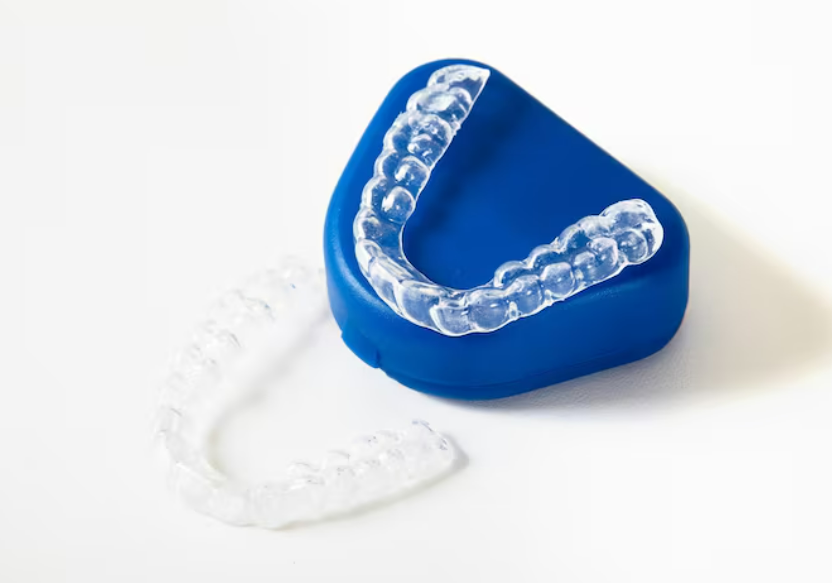
The aligners come out. That is genuinely the core of it. You eat normally. You brush your teeth normally. You don’t have a list of foods you can’t touch for the next eighteen months. You don’t dread the week after an adjustment appointment. For adults who are regularly in front of people — presenting, pitching, being on camera, whatever that looks like for you — not having a mouth full of metal for a year and a half is not a vanity thing. It’s a quality-of-life thing.
The invisalign price also covers a treatment approach that’s genuinely different from the start. Your teeth are scanned in 3D. The whole movement plan is mapped digitally before any aligners are made. You can see a simulation of what the result should look like before you’ve committed to anything. That transparency — knowing what you’re agreeing to — isn’t something traditional treatment always offers upfront. Some people find that enormously reassuring. Others don’t care. Know which camp you’re in.
What none of this buys is a shortcut. Clear aligners are genuinely effective — for the right cases. For complex bite corrections, serious crowding, or tooth movements that require precise three-dimensional control, fixed appliances still give the specialist more to work with. The most expensive option is not automatically the best one for your specific situation, and any practitioner who tells you otherwise — or who never mentions braces as a potential alternative — is worth being skeptical of.
What braces do that gets overlooked
Nobody writes glowing blog posts about traditional braces anymore. It’s not a very glamorous pitch. But here’s the thing: for a lot of cases, they’re the more effective tool. That’s just true.
Modern braces are not what you’re imagining. The brackets are smaller, the systems are more refined, and self-ligating brackets — which clip the wire in place instead of using elastic bands — have reduced both friction and treatment time in a lot of cases. The experience is considerably better than the reputation.
But the real argument for braces isn’t comfort. It’s consistency. Braces do their job constantly, whether you’re paying attention or not. They’re working at midnight. They’re working on the flight to London. They’re working on the Thursday night when you got home late and your whole routine fell apart. There is no version of events where you forget to put them back in.
That last point is the one that gets buried in most Invisalign comparisons, and it genuinely shouldn’t be. Wearing the removable system properly means 20 to 22 hours a day. Every day. Without exception. That’s putting them back in after every meal, every coffee, every work lunch that ran ninety minutes instead of forty-five. For a lot of people, in a lot of lifestyles, that’s harder than it sounds when you’re sitting in a consultation room feeling optimistic. It doesn’t mean Invisalign is wrong for you. It means you should be honest with yourself before you decide.
A good orthodontist will have this conversation with you directly. If a clinic goes through your whole consultation without raising the compliance question, that’s information about how that clinic operates.
On caring how you look during treatment which is completely reasonable
Let’s just say it plainly: most adults choose Invisalign because they don’t want visible metal in their mouth for the better part of two years. That’s the real reason. And it’s a completely legitimate one.
Eighteen months is a long time. Two years is longer. If your work puts you in front of clients, cameras, or rooms full of people — or if you’ve just got a wedding, a promotion process, a life milestone in that window — how you feel about how you look during that time is not a shallow concern. It’s real. It affects how you present yourself. It affects your confidence in rooms where confidence matters.
To be clear about what clear aligners actually look like: they’re not invisible. If you’re standing close to someone in good light, you can see them. But across a conference table, on a video call, across a restaurant — most people genuinely won’t notice. Metal braces are immediately obvious. Ceramic braces are better but still visible, and they can stain, which is worth thinking about somewhere like Dubai where hot drinks are basically a permanent fixture of daily life.
The point isn’t that one option is objectively more attractive during treatment. The point is that your comfort with your appearance across eighteen-plus months is a real factor in your experience of treatment, and you’re allowed to weight it. Any specialist who dismisses it or makes you feel like you’re asking the wrong question isn’t reading the room.
The numbers that don’t show up in the headline quote
Whatever you end up paying — whether that’s the invisalign price or a braces quote — the number you’re given in the consultation is not the complete picture. A few things tend to come as surprises if no one flags them at the start.
Retainers. This one is non-negotiable and yet somehow people are still surprised by it. When treatment ends, you wear retainers. Indefinitely. If you don’t, your teeth move back. That’s not a worst-case scenario; that’s just what teeth do without retention. In Dubai, retainers typically cost AED 500 to AED 2,000 depending on the type. This is a cost that starts the day your treatment ends and doesn’t stop. Account for it now.
Refinements (Invisalign). If your teeth don’t track exactly as planned by the end of your initial aligner series — which happens with some regularity — you’ll need additional aligners to finish the job. Some clinics include this in the quoted invisalign price. Others charge it as a separate line item that can run to AED 2,000 or more. This is a question to ask before you sign the treatment agreement, not after.
Broken things. Brackets break. Aligners crack or get lost. Most comprehensive packages cover emergency appointments and replacements — but not all of them do. Ask how the clinic handles this before you’re in the situation of finding out.
Finding the right provider and why this part matters more than the treatment choice
The Orthodontist in Dubai landscape is genuinely large now, and the quality variation is real. You have hospital-integrated departments, specialist orthodontic practices, and general dental clinics that do orthodontics as one service among many. These are not equivalent. And for a relationship that spans a year or more, the difference matters.
A few things worth verifying: DHA or HAAD licensing for the specific doctor treating you — not just the clinic itself. Postgraduate orthodontic training, not just a general dentistry qualification. Documented case history that includes cases similar to yours in complexity. And some sense of how long that individual doctor has been practicing here — not just how long the clinic has been open. Practices change staff. You want to know who you’ll actually be seeing for the next twelve to twenty-four months.
The green flags are less dramatic than you might expect. A specialist who asks you questions before they start talking about treatment. A consultation where they explain your case to you in specific terms — what’s actually going on with your teeth, what movement is needed, why they’re recommending what they’re recommending. The standard of Expert Orthodontics & Braces Treatment in Dubai has improved significantly over the past decade, and the best practitioners here operate without any hard-sell pressure. The consultation should feel like a clinical conversation, not a pitch.
The red flags are easier to spot. If every question you ask pivots back to pricing, package options, or urgency — “we have a promotion running this month” — that’s a signal about how that clinic sees you. A good specialist will answer the difficult questions directly: what happens if compliance isn’t perfect, what does the alternative treatment look like, what’s the plan if something unexpected comes up. Ask those questions and pay attention to the answers.
On treatment time because this gets stretched in the marketing
A quick note on timelines, because the Invisalign marketing leans heavily on the idea of speed and it isn’t always accurate.
For simple cases, yes — Invisalign can finish in six to twelve months, which may be faster than braces for the same case. But for anything more complex, both options can run two years or more. And in some of those cases, fixed appliances actually finish faster because the specialist has more direct control over movement.
What should concern you is any clinic that quotes you a specific duration before completing a proper assessment. Duration is determined by your teeth and how they respond to treatment. It can’t be predicted from a quick look at your mouth and a confident smile. A realistic estimate comes from scans, a full diagnosis, and a practitioner who’ll give you a real answer over a flattering one.
Okay so which one should you actually choose?
Here’s the honest version, with no hedging.
Invisalign makes sense for you if: your case is mild to moderate, the way you look during treatment genuinely matters to your life and your work, you know yourself well enough to be confident you’ll actually wear the aligners for 20+ hours a day without cutting corners, and the invisalign price lands within your budget without stress. If all four of those are true, clear aligners are probably the right call.
Braces make more sense if: your case is more complex than mild, the cost difference is meaningful to you, you have honest doubts about your compliance with a removable system, or your orthodontist looks at your specific case and tells you that fixed appliances will get you a better result. That last one is worth taking seriously. When a specialist who has no particular stake in the outcome tells you that braces are the right tool for your teeth, believe them.
The thing both options have in common is that neither is the right choice in the abstract. They’re only right or wrong in the context of your actual teeth, your actual life, and an actual clinical assessment by someone who’s qualified to give one. Not a comparison article. Not a quiz on a clinic website. Not a recommendation from a friend who had a different case.
Book a few consultations. Ask awkward questions. Pay attention to how they’re answered. The decision you make will be with you for a long time — worth spending a few afternoons
getting it right.
Frequently Asked Questions
Is Invisalign always more expensive than braces in Dubai?
Usually, yes. Invisalign tends to cost more than metal braces for a similar case, although the exact difference depends on case complexity, the treatment tier you need, and what is included in the clinic’s package.
How do I know whether my case is suitable for Invisalign?
That depends on the type of movement your teeth need. Mild to moderate alignment issues often work well with clear aligners, but more complex bite problems or severe crowding may be better treated with fixed braces. A proper assessment with scans is the only reliable way to know.
Do Invisalign aligners really need to be worn for 20 to 22 hours a day?
Yes. Consistency is a major part of whether Invisalign works as planned. Taking them out too often or leaving them out for long periods can slow progress and affect the final result.
Are ceramic braces a good middle ground between Invisalign and metal braces?
For many people, yes. Ceramic braces are less noticeable than metal braces and can be a useful option when you want something more discreet but still need the control that fixed appliances provide.
What should I ask a clinic before starting treatment?
Ask what is included in the quote, whether refinements or replacements cost extra, how retainers are handled at the end of treatment, how long the doctor has been treating cases like yours, and why they are recommending one option over the other.
Will I need retainers after Invisalign or braces?
Yes. Retainers are necessary after both treatments. Teeth naturally shift over time, so retention is part of maintaining the result, not an optional extra.