
The silver cap goes on and the questions start.
Why does a baby tooth need a crown? Is that not overkill for something that will fall out anyway? Why is it silver? Can it be tooth-coloured? And what exactly is this thing sitting in your child’s mouth for the next two to four years?
These are reasonable questions. Nobody explains them properly in the eight minutes of an appointment, between the child being unsettled and the parent trying to absorb information they were not expecting.
So here it is, properly. Pediatric crowns — what they are, why they get placed, which types exist, how they differ, and what happens after the child goes home with one. The complete picture, without the clinical shorthand.
Why a Baby Tooth Gets a Crown Instead of Just a Filling
The straightforward answer: sometimes a filling is not enough.
A baby tooth that has been significantly damaged by decay, or that has undergone treatment like a pulpotomy, no longer has the structural integrity to hold up under normal chewing force with a filling alone. The decay removed the enamel and dentine. The treatment involved opening and sealing the tooth. What remains is a shell — functional in shape, compromised in strength.
A filling placed into a heavily compromised tooth does not compensate for what is missing. The tooth fractures. The filling fails. The tooth is lost early, and early loss of a primary molar has consequences: adjacent teeth drift, the permanent molar erupts into a reduced space, crowding follows.
Pediatric crowns exist specifically for this gap between ‘too damaged for a filling’ and ‘not yet bad enough to extract.’ They restore the full form of the tooth, rebuild the chewing surface, and protect whatever tooth structure remains underneath. The tooth stays in service. The space is held. The permanent tooth below develops undisturbed.
Other situations: large multi-surface cavities a filling cannot reliably cover, developmental structural defects, high-decay-risk children where a filling is likely to fail and repeat treatment is harder, and very young children where a single durable restoration is clinically preferable to multiple appointments.
It is not overkill. It is matching the restoration to what the tooth actually needs.
The Types of Pediatric Crowns — Because the Dentist May Have Used All the Words at Once
Not all pediatric crowns are the same material or the same approach. The choice depends on which tooth is being crowned, the child’s age and cooperation, and the clinical situation.
Stainless Steel Crowns
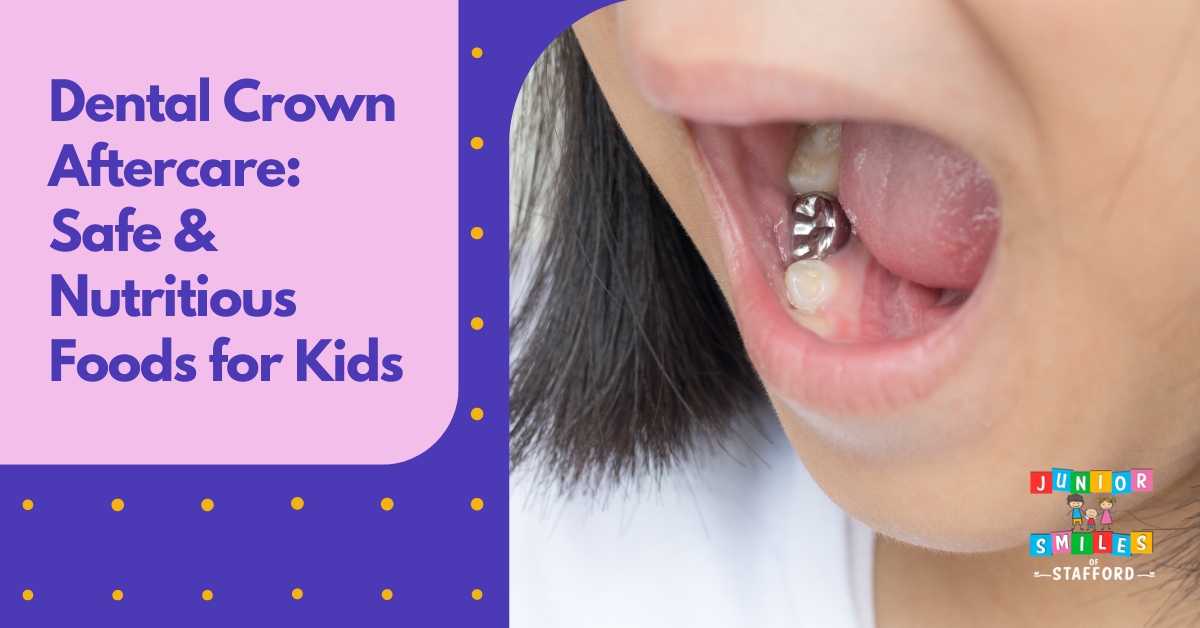
The original. The standard. The one most parents mean when they say ‘the silver cap.’
Stainless steel crowns in pediatric dentistry have a track record spanning decades. Strong, durable, placed in a single appointment. The crown is pre-formed, sized to the tooth, and cemented in place. Minutes once the tooth is prepared.
They are used almost universally for primary molars — the back teeth that take most of the chewing load. They are visible when a child opens wide. They are not visible when a child talks or smiles normally. For back teeth, visibility is rarely the clinical concern it is for front teeth.
Success rate for primary molars: consistently in the high nineties over the life of the tooth. No other restoration type matches that number.
NuSmile Crowns — Tooth-Coloured Over Stainless Steel
NuSmile stainless steel crowns are a specific product category that combines the structural foundation of stainless steel with a tooth-coloured composite or zirconia facing on the outer surface. The result is a crown that has the durability of metal with a considerably more natural appearance.
NuSmile stainless steel crowns are most commonly used for upper front teeth and first molars where aesthetics matter more to the family. The procedure is largely the same as for conventional stainless steel crowns — single appointment, pre-formed, cemented. The facing can chip if the child bites hard objects, which is the main clinical trade-off versus plain stainless steel.
Zirconia Crowns
Fully tooth-coloured, no metal. The most aesthetic option currently available for primary teeth, used when appearance is the priority — typically front teeth.
The trade-off: more tooth preparation, more chair time, higher cost. For highly anxious or very young patients, the extended preparation is a practical barrier.
Strip Crowns
A composite resin restoration placed using a transparent plastic form — the ‘strip’ — that shapes the filling material and is then removed after the composite sets. Used almost exclusively for primary front teeth where the decay is not extensive enough to require a full crown but a simple filling does not provide adequate coverage.
Technique-sensitive, less durable than metal or ceramic options. They look natural. Moisture control during placement makes them harder to place on very young or anxious children.
Stainless Steel Is the Default. Here Is Why That Is Defensible.
Parents who arrive expecting tooth-coloured crowns sometimes push back on the recommendation of stainless steel. The pushback is understandable. But the clinical reasoning behind the default deserves explaining.
Stainless steel crowns in pediatric dentistry are the most studied restoration type for primary posterior teeth. Study after study across decades puts the success rate above ninety percent over the life of the tooth. No other material for primary molars has a comparable evidence base. The failure mode of a stainless steel crown — the crown coming off, which is rare — is also the most manageable failure mode. Recementing is straightforward.
For back teeth taking the most mechanical load, the stainless steel crown is not the conservative option. It is the proven one. A filling on a heavily compromised molar is the higher clinical risk.
For front teeth, the case is different. Aesthetics matter more for visible teeth. The child’s and the family’s preferences carry more weight. The chewing load is lower. Zirconia crowns and composite strip crowns are both appropriate options and are used routinely. The dentist weighing all of this for a specific tooth, a specific child, and a specific level of decay is making a clinical judgement — not a cost-cutting one.
The question worth asking is not ‘can we do tooth-coloured’ but ‘which type is right for this tooth, and why.’ The answer should be specific.
What the Placement Appointment Actually Involves
For a stainless steel crown following a procedure like a pulpotomy: the crown placement is typically the last step of that same appointment. The tooth is prepared, the crown is sized and fitted, and it is cemented in one session.
For a standalone crown: decay removal, tooth preparation, crown sizing from pre-formed options, cementation. Local anaesthesia throughout — tooth and surrounding tissue completely numb. Forty-five minutes to an hour for a single crown.
What the child experiences: numbness, pressure, the crown being seated. Most children do not find the crown placement itself difficult once the anaesthesia is working. The injection is usually the hardest part.
After placement: the crown should feel settled in the bite within a day or two. If it feels noticeably high — the child keeps biting on that tooth first — call the practice. A minor adjustment solves this immediately.
Aftercare: Less Complicated Than It Sounds
A crowned tooth does not need special maintenance. It needs the same maintenance as every other tooth in the mouth, done properly.
Brushing:
Twice a day, fluoride toothpaste, two minutes. The gum line margin is where plaque accumulates most easily — that area needs deliberate attention. A soft brush and gentle circular motion at the gum line covers it.
Flossing:
Floss between the crowned tooth and its neighbours as normal. The crown does not make flossing harder or less necessary. If anything, keeping the area between teeth clean reduces the chance of decay starting on the adjacent teeth.
Diet:
Avoid sticky, chewy foods for the first few days while the cement sets. After that, normal diet applies. For NuSmile or zirconia crowns with composite facings, hard objects carry a small chipping risk. Worth noting, not worth worrying about.
Follow-up:
The crown should be checked at every routine dental visit. The dentist will assess the margin, the gum tissue around it, and the X-ray of the root beneath to confirm everything is stable. These check-ins are when early problems are caught. Routine attendance is not optional.
What to Watch for After the Appointment
Most post-placement experiences are normal. A few warrant a call.
Normal in the first 24 to 48 hours:
• Mild soreness at the injection site or around the tooth
• The crown feeling slightly unfamiliar when biting — this usually settles
• The child commenting on the metallic taste or the different feel
Contact the dental practice if:
• The bite feels significantly off after 48 hours and is not improving
• The crown becomes loose or detaches
• Swelling or tenderness develops in the gum around or below the crown
• The child complains of pain when biting or of ongoing sensitivity
• The facing on a NuSmile or zirconia crown chips or cracks
A crown that comes off is not an emergency — but it does need attention promptly. Keep the crown if it is intact. Call the practice. In most cases it can be recemented at a short appointment.
How Long Does a Pediatric Crown Last? The Answer Is Simpler Than Parents Expect.
Until the tooth falls out.
A well-placed crown is designed to last the functional life of that tooth — from placement until the permanent tooth pushes it out naturally. For a primary molar crowned at age five or six, that is roughly five to seven years.
Stainless steel crowns achieve this in over ninety percent of cases with normal oral hygiene. Aesthetic crowns with composite facings can chip, but chips are often repairable rather than requiring full replacement.
When the baby tooth exfoliates naturally, the crown comes out with it. There is nothing left behind. The permanent tooth erupts into the space as normal. The crown was temporary by design — not because the material was cheap, but because the tooth was always going to be replaced.
Choosing the Right Setting for This
A crown on a primary tooth is a standard procedure. It is also a standard procedure being performed on a child who may be young, anxious, or both, in a chair, under local anaesthesia, with a dentist they may have seen only a few times.
The technical steps are not the variable. The clinical environment is.
A paediatric specialist has postgraduate training in managing children at different developmental stages — pacing appointments, handling anxiety, knowing when sedation is worth discussing. A general dentist treating children occasionally has generalist training. The gap is not always visible from the outside, but it shows in the appointment.
Families in the UAE looking for this level of care have access to it. Medical & Dental Services in Dubai at specialist paediatric centres include practices where pediatric crowns are placed routinely, with the staffing and equipment appropriate to young patients. A well-established Dental & Medical Center with paediatric dental specialists can assess which crown type is appropriate for the specific tooth, manage the appointment in a way that works for the specific child, and provide the follow-up monitoring that catches problems before they develop. Families in International City Dubai and nearby areas have multi-specialty centres available where paediatric dental care sits alongside paediatric medicine — relevant when a child has health conditions that affect how anaesthesia is approached.
If the child has significant dental anxiety, raise the sedation question — nitrous oxide or oral sedation — before the appointment. A practice that offers these routinely is better placed for that child.
What Parents Ask Before Saying Yes
The real questions. Not the ones that sound composed.
My child’s tooth is going to fall out eventually. Why does it need a crown?
Because the years between now and when it falls out matter. Primary molars hold the space that permanent molars need to erupt into correctly. A molar lost early causes the adjacent teeth to drift. The permanent tooth arrives with no room. Crowding follows, and orthodontic treatment follows that. A crown keeps the tooth in service until the natural replacement is ready.
Why is it silver? Can it be tooth-coloured?
Stainless steel is the default for back teeth: most durable, fastest to place, strongest success data. Not visible when the child talks or smiles — only when they open wide. For front teeth, NuSmile crowns with a tooth-coloured facing and fully ceramic zirconia crowns are available and used routinely. The choice depends on which tooth it is.
Is the procedure painful?
Performed under local anaesthesia — the area is completely numb. The child feels pressure but not pain. The injection is usually the hardest part. Mild soreness afterward is normal and handled with children’s paracetamol. Most children stop noticing the crown within days.
Will the crown fall off?
It can, but rarely. Stainless steel crowns are cemented in and have a very low detachment rate in normal use. Sticky or very chewy foods — toffee, hard gummies — are the most common cause of a crown becoming loose in the weeks after placement. If it does come off: keep it, call the practice, bring the child in. Recementation at a short appointment is usually all it takes.
NuSmile crowns — are they worth it?
NuSmile stainless steel crowns with a tooth-coloured facing are a reasonable middle ground between plain stainless steel and fully ceramic zirconia. They have the structural strength of metal with considerably better aesthetics. The main limitation is the composite facing, which can chip if the child chews hard objects. For front teeth in children whose families find the silver appearance difficult, they are a well-evidenced option. For back molars under heavy chewing load, plain stainless steel is still the stronger recommendation clinically. The right choice depends on which tooth it is.
How do I clean around a crown?
Exactly as any other tooth. Brush twice daily with fluoride toothpaste, paying particular attention to the gum line margin. Floss between the crowned tooth and its neighbours. The spaces between teeth are where decay starts on adjacent teeth if hygiene slips.
What does this cost in Dubai and does insurance cover it?
Costs vary by crown type and by practice. Stainless steel crowns are typically the most affordable option. Zirconia and NuSmile crowns cost more due to the materials and the technique involved. Most UAE health plans include paediatric dental restorations, though the level of coverage varies and some plans require pre-authorisation for crowns. Confirm with both the insurer and the clinic before the appointment. Specialist paediatric practices handle this regularly and can help with the documentation.